Wilsons Surf'n to Folk Music
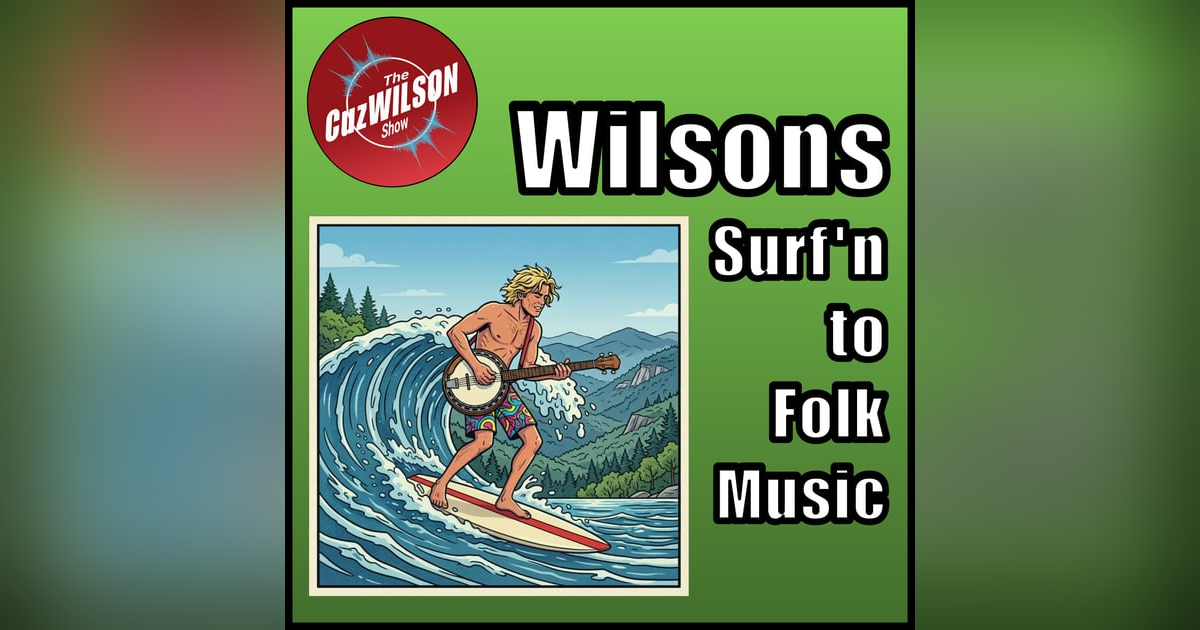



This week's episode of the Cuz Wilson Show delves into the captivating narrative of Julian Wilson, a legendary professional surfer who has embarked on a remarkable comeback after a three-year hiatus. In this installment, we explore the intricacies of his journey, examining the challenges he faces as he aspires to secure a place on the 2026 championship tour amidst a fiercely competitive landscape. Moreover, we pay homage to the rich cultural tapestry of Appalachian music through our spotlight on Warren Wilson College, an institution dedicated to preserving and revitalizing this cherished heritage. The episode further highlights the dual identity of Steve Wilson, a master luthier whose craftsmanship is intertwined with his successful bluegrass band. Through these stories, we illuminate the profound connections that bind individuals, communities, and cultures, all under the unifying banner of the name Wilson. Join us as we navigate these narratives, celebrating achievements and aspirations that resonate far beyond mere competition. The Cuz Wilson show progresses from a delightful exploration of musical heritage to a profound examination of personal resilience, as it prominently features Julian Wilson, a luminary in the realm of professional surfing. This episode delves into the multifaceted life of Wilson, who, after an illustrious career marked by numerous accolades and a significant global presence, made the audacious decision to step away from the limelight during the peak of his prowess. The narrative unfolds with the backdrop of Wilson's return to the competitive surfing scene, highlighting not only his physical capabilities but also the psychological fortitude that defines his character. This juxtaposition of triumph and introspection serves to illuminate the broader themes of legacy, commitment, and the relentless pursuit of excellence that resonate throughout the episode. Furthermore, the show artfully transitions to a geographical journey across the United States, introducing listeners to Warren Wilson College, a bastion dedicated to the preservation of Appalachian music traditions. The institution's innovative educational philosophy—an intricate triad of academics, work, and service—exemplifies a holistic approach to cultural preservation. This segment emphasizes the significance of maintaining the integrity of regional music, showcasing the college's commitment to fostering a living tradition that is both relevant and resonant in contemporary society. The dual narratives of Julian Wilson's personal journey and the college's mission converge to reveal the intricate connections between individual stories and collective cultural heritage, culminating in a rich tapestry of insights that engage and inspire listeners. In a captivating exploration of personal and cultural legacies, the Cuz Wilson show presents an episode replete with narratives that traverse the realms of surfing and music. The focal point of the discussion is Julian Wilson, a celebrated professional surfer whose recent return to competition after a hiatus invites contemplation on the nature of resilience and determination. This segment not only recounts Wilson's storied past, including his accolades and contributions to the sport, but also delves into the underlying motivations that prompted his temporary withdrawal from the surfing circuit. The episode poignantly captures Wilson's journey of self-discovery and the profound realization that true fulfillment often lies beyond the accolades that define one's career. As the episode progresses, listeners are transported to the picturesque Blue Ridge Mountains, where Warren Wilson College stands as a testament to the preservation of Appalachian music traditions. The college's holistic approach, characterized by its triad of academics, work, and service, serves as a model for cultural sustainability. This segment emphasizes the importance of engaging with one's community and heritage in meaningful ways, showcasing how the college nurtures the next generation of musicians and storytellers. The interplay between Wilson's personal narrative and the college's mission underscores a larger theme of interconnectedness, inviting audiences to reflect on how individual pursuits can contribute to the greater cultural landscape. The latest installment of the Cuz Wilson show deftly intertwines the personal journey of Julian Wilson with the broader cultural narrative of Appalachian music preservation. The episode commences with an evocative recounting of Wilson's return to competitive surfing, a comeback that is emblematic of his indomitable spirit and dedication to the sport. As he navigates the challenges of re-entering a fiercely competitive arena, listeners are provided with an intimate glimpse into the psyche of an athlete defined not merely by his victories but by his capacity to confront adversity with grace and tenacity. This exploration of Wilson's character serves as a poignant reminder of the complexities inherent in defining success and legacy in a world that often prioritizes immediate results over long-term growth. Transitioning seamlessly, the episode shifts focus to Warren Wilson College, an institution committed to safeguarding the rich tapestry of Appalachian music. The college's innovative curriculum, built upon a tripartite model of academic rigor, hands-on work experience, and community engagement, exemplifies a proactive approach to cultural preservation. This segment highlights the vital role that educational institutions play in fostering an appreciation for regional traditions while simultaneously empowering students to become stewards of their cultural heritage. By framing Wilson's story within the context of the college's mission, the episode invites listeners to consider the myriad ways in which personal and collective narratives converge, ultimately enriching the cultural fabric of society.
Takeaways:
- In this episode, we explore the remarkable journey of professional surfer Julian Wilson and his impressive comeback to the sport.
- The podcast delves into the cultural significance of Wilson College, dedicated to preserving Appalachian and folk music traditions.
- We highlight the dual identity of the Wilson Banjo Company, showcasing both its handcrafted instruments and the successful bluegrass band it spawned.
- Listeners are invited to consider the deeper connections between individuals and their passions, as exemplified by the name Wilson.
- The episode emphasizes the importance of legacy in sports, particularly in the context of Julian Wilson's career and personal choices.
- We also discuss the ethical challenges of preserving cultural heritage, particularly in relation to the Mountain Music Archive at Warren Wilson College.
Links referenced in this episode:
- riviaprojects.com
- warrenwilson.edu
- wilsonbanjocompany.com
- cuzwilsonshow.com
- squeakybeach.com
- wilsoncoffeepage.com
- wilsonavenueband.com
- woodrowwilsonsilvermedal.com
- wilsongolf.com
Companies mentioned in this episode:
- Wilson
- Rivia Projects
- Wilson Banjo Company
- Wilson Golf
- Woodrow Wilson Silver Medal
00:00 - Untitled
00:07 - Surfing with the Sharks
03:19 - The Comeback of Julian Wilson
07:11 - The Comeback of Julian Wilson
14:59 - The Legacy of Frederick Wilson: A Complex Figure
17:51 - The Role of Warren Wilson College in Preserving Appalachian Music
29:56 - Transitioning to the Things Category
35:00 - The New Era of Wilson Banjo Company
35:54 - Celebrating a Decade of Success
In last week's episode, we danced with three Wilsons on the beach to the music of surf rock.
Speaker AAnd this week, instead of dancing with the stars, we jump in the water with a Wilson to go surfing with the sharks.
Speaker AStay tuned folks.
Speaker AWelcome to the Cuz Wilson show where we learn all about Wilson's and people, places and things.
Speaker AAnd we salute Wilson's and their achievements from the past to the present.
Speaker AWe support nonprofits named Wilson with our Cuz merch and we showcase places, companies and products named Wilson.
Speaker AHello Cuz.
Speaker AI'm your host and wilsonologist Kenny Wilson.
Speaker AThis week in our people category, we hit the waves with legendary pro surfer and shark whisperer Julian Wilson.
Speaker AIn our places category, we wash the sand off our feet and take a road trip across the US For a little tote tap in music.
Speaker AIn the heart of the Blue Ridge Mountains, we visit a college named Wilson, whose mission it is to preserve the genre of mountain music and folk music.
Speaker AIn this week's themes category, we we take you a couple hours south down the Blue Ridge Mountains to Westminster, South Carolina.
Speaker AWe showcase the Wilson banjo which is custom made by Steve Wilson and he plays it in a chart topping bluegrass band named Wilson.
Speaker AIn this week we kind of have a bonus segment that is actually the answer to last week's Cuz quiz.
Speaker AThe answer to that question is so cool I had to make a complete deep dive just on that person.
Speaker ABut make sure you stick around for the Wilson's in the news of our Cuz buzz section.
Speaker AI've got some goodies in there, so let's get on with the show.
Speaker BAnd now it's time for the people category.
Speaker ASince Wilson and the Beach Boys first single was called Surfing, we jump ahead a few years from 1961 and get in the water with a surfer legend named Wilson.
Speaker AAnd just like Brian Wilson of the Beach Boys, he made a huge pivot in the peak of his career.
Speaker AMary, I bet you know a little bit about his career, so go ahead and share his story with us.
Speaker CYou know, in the world of sports, there's nothing quite like a great comeback.
Speaker CAnd today we're diving into the story of a surfing legend who just walked away right at the peak of his powers, only to come back for one last shot at glory.
Speaker CThis is the story of Julian Wilson's quest.
Speaker CAnd this quote, man, it says it all.
Speaker CAfter three years away, those were his words.
Speaker CIt just shows you that fire, that competitive drive that really separates the good from the great.
Speaker CIt never went out.
Speaker CAnd it's exactly why the entire surfing world is buzzing right now.
Speaker CSo that really brings us to the big question here.
Speaker CThis isn't just about winning a couple of contests.
Speaker CNope.
Speaker CThis is about legacy.
Speaker CIt's about pushing past the limits of age of expectations to try and join the ranks of the immortals.
Speaker CSo the real question is, can he actually do it?
Speaker CAlright, let's dive right into the news that sent a shockwave through the whole community.
Speaker CAfter years of wondering and waiting, it's Julian Wilson is back.
Speaker CAnd listen, he's not just dipping his toes in the water here.
Speaker CHe is aiming for the absolute top, A spot on the 2026 championship tour.
Speaker CAnd get this, he's already proved he's dead serious at the Gold Coast Pro.
Speaker CRecently, he came in as a wild card in the trials and surfed all the way to the final.
Speaker CHe showed everyone, and probably himself, that he still absolutely has what it takes.
Speaker CBut okay, to really get why this comeback is such a big deal, we gotta go back and understand why a guy who was ranked number two in the world would just walk away in the first place.
Speaker CAnd let's be crystal clear about this.
Speaker CThe man was at the absolute top of his game.
Speaker CRookie of the year in his debut.
Speaker CA win at the legendary Pipemasters and he finished 2018 as the world number two.
Speaker CI mean, he was on tour since 2011, a constant threat everywhere he went, right up until he stepped away after the Olympics in 2021.
Speaker CSo the thing is, he didn't leave because he was injured or washed up.
Speaker CNot at all.
Speaker CIt was a choice, a conscious one.
Speaker CThe pandemic made the constant travel of the tour a nightmare.
Speaker CSure.
Speaker CBut the real reason he wanted to be home for his wife and his two young kids.
Speaker CHe made a choice based on his values.
Speaker CHe basically traded that high pressure, high stakes world of pro surfing for something completely different.
Speaker CHe spent more time at home.
Speaker CHe launched his own clothing brand, Rivia Projects.
Speaker CAnd as he put it, he was returning to his roots.
Speaker CBut here's the thing about Julian Wilson.
Speaker CHis story is about so much more than just surfing talent.
Speaker CIt's really a story about incredible character.
Speaker CA character that's been forged in these moments of insane crisis.
Speaker CAnd if you need an example, look no further than this one.
Speaker CIt's the final of the JB Open.
Speaker CWilson is in the water against his friend Mick Fanning.
Speaker CAnd what happens next?
Speaker CWell, it's a moment that is just burned into the memory of anyone who saw it.
Speaker CSo while his buddy, Mick Fanning is literally fighting for his life against a great white shark, this was Julian Wilson's immediate thought, not to panic, not to paddle to shore, but to see his surfboard as a weapon and paddle towards the danger to save his friend.
Speaker CI mean that's just pure selfless courage right there.
Speaker CFanning himself said he could never repay him, calling him a warrior.
Speaker CPeople were so moved, the Premier of Queensland even nominated him for a national bravery award.
Speaker CIt's a moment that tells you who he is when way more than any contest win ever could.
Speaker CAnd what's really wild is that this isn't some one off thing.
Speaker CThat same ability to perform under the most intense pressure imaginable.
Speaker CIt's a pattern you see again and again in his career.
Speaker CTriumph born from turmoil.
Speaker CAnd you can literally see this pattern play out.
Speaker COkay, 2014, both his parents are fighting cancer.
Speaker CHe's having a terrible year on tour.
Speaker CWhat happens?
Speaker CHe wins the Pipemasters on the final wave.
Speaker CThen get this, 2018, he's dealing with a major shoulder injury and his first kid is born four weeks early.
Speaker CThe stress is immense and what does he do?
Speaker CHe wins his home event on the Gold Coast.
Speaker CIt's like the harder things get personally, the better he performs professionally.
Speaker CSo you see the point here isn't just about him re qualifying, it's about him trying to earn a spot among the absolute icons of the sport.
Speaker CThe legends of the comeback.
Speaker CI mean this is the club he's trying to get into.
Speaker CYou've got Tom Curran who came back after two years off and won a world title.
Speaker CThen there's Marc Aquialupo, a decade away from the sport, comes back at 33 and wins the whole thing.
Speaker CChelsea Hedges returning to the top 10 after having a baby.
Speaker CAnd of course Kelly Slater's so called retirement, which led to five more world titles.
Speaker CThe bar is set unbelievably high.
Speaker COkay, so all of that brings us back to right now, to this huge unwritten final chapter.
Speaker CAnd the challenge facing Julian Wilson today is, well, it might just be the biggest one of his entire career.
Speaker CAnd believe me, he's not getting any free passes.
Speaker CHe has to claw his way back through the Challenger series which is an absolute meat grinder.
Speaker CIt just chews up and spits out some of the best surfers in the world.
Speaker CThe numbers themselves are just brutal.
Speaker CHe's going to be competing against more than 100 of the hungriest, most talented up and coming surfers on the entire planet.
Speaker CAnd they're all fighting it out across just six high stakes make or break events held all around the globe.
Speaker CAll for one of only 10 available spots on the championship tour 10.
Speaker CThe margins for error are razor, razor thin.
Speaker CAnd think about this.
Speaker CIf he pulls it off, he'll be 37 years old when he starts that 2026 season.
Speaker CIn a sport that gets younger and younger every year, he'd be one of the oldest guys out there battling kids who were in grade school when he was winning his first events.
Speaker CSo that's the bottom line, isn't it?
Speaker CWe know he's got the courage.
Speaker CWe know he's got the history of thriving under pressure.
Speaker CBut in today's world of surfing, which is more competitive and athletic than it's ever been, will character be enough to write one last legendary chapter?
Speaker CWe're all going to be watching to find out.
Speaker AThanks again, Mary.
Speaker ASince we had a couple of episodes covering the Olympics a few weeks ago, I also wanted to add that Julian Wilson represented Australia at the 2020 Olympic Games in Tokyo.
Speaker AAnd that was the first year that surfing was included as an Olympic sport.
Speaker ANow, as we move ahead to 2026, Julian Wilson has decided to retire again and focus on his clothing brand, Rivia Projects.
Speaker ANow, the name Rivia came from the spelling of his two children, river and Olivia.
Speaker AHe took the first three letters of river and the last three letters of Olivia and created Rivia Riv Via.
Speaker AThat's pretty cool, isn't it?
Speaker AAnd now it's time for our Cuz Quiz Question of the week.
Speaker ALast week's Cuz quiz was, has there ever been a King Wilson in history?
Speaker AThe answer is kind of, or the answer could be maybe, or some would say sure.
Speaker AAnd when I was discovering the answer to that question, I decided to make a deep dive for the backstory of the king.
Speaker AHey, Larry, explain this one for us.
Speaker BLet's get right into a story that honestly feels more like a myth than than actual history.
Speaker BIt's the absolutely wild tale of a British army deserter who vanishes into the highest mountains on Earth and somehow comes out the other side not as a fugitive, but as a king.
Speaker BSo our story kicks off in a place called Harsel.
Speaker BPicture a stunning, incredibly remote valley deep in the Gard Wall.
Speaker BHimalayas.
Speaker BIt's the kind of place that looks like it's straight out of a fantasy novel.
Speaker BAnd it was right here that a young Englishman, Frederick Wilson, didn't just find a place to hide.
Speaker BHe literally carved out his own kingdom and became a legend.
Speaker BAnd here's where it gets really fascinating.
Speaker BThe story goes that the great author Rudyard Kipling actually based his famous story, the man who Would Be King on Wilson's Unbelievable life.
Speaker BI mean, that quote alone tells you everything you need to know about just how epic his life really was.
Speaker BAnd that right there is the million dollar question we're going to unpack.
Speaker BHow on earth does a man on the run from the most powerful empire in the world end up ruling a part of it?
Speaker BLet's dig in.
Speaker BFirst things first, let's talk about his name to the locals.
Speaker BHe wasn't Frederick.
Speaker BThey called him Pahari Wilson.
Speaker BPahari literally means of the mountains.
Speaker BThink about that.
Speaker BIt wasn't just a nickname.
Speaker BIt was a title that showed how completely he had become part of this new world.
Speaker BHe was a man of the Himalayas.
Speaker BSo how did he even end up in this hidden valley?
Speaker BWell, his story doesn't start with a crown.
Speaker BIt starts with a crime.
Speaker BWe've got to go back to his escape from the British army, because that's the event that set this whole incredible story in motion.
Speaker BOkay, so just look at this timeline for a second.
Speaker BHis life completely flips in just a handful of years.
Speaker BIn 1836, he's just a regular private in the East India Company.
Speaker BBut then, during the disastrous first Anglo Afghan War, he makes a huge decision.
Speaker BHe deserts.
Speaker BBy the early 1840s, he's a wanted man fleeing for his life into one of the most remote places on the entire planet.
Speaker BCan you just imagine this for a second?
Speaker BHe shows up in the kingdom of Terrigard Wall, totally alone with nothing but his army issue musket.
Speaker BHe begs the local Raja for protection, but the Rajah is terrified of ticking off the British, so he says no.
Speaker BWilson was completely, utterly on his own.
Speaker BBut you know, a fugitive has to find a way to survive.
Speaker BAnd Wilson, he did a lot more than just survive.
Speaker BHe thrived where others saw an empty wilderness.
Speaker BHe saw a massive opportunity.
Speaker BAn opportunity that would not only make him a king, but would also change the very landscape that saved him.
Speaker BIt all came down to simple supply and demand.
Speaker BThe British Empire, the same people he was hiding from were building thousands of miles of railways all across India.
Speaker BAnd to do that, they needed millions and millions of strong wooden railroad ties, or sleepers.
Speaker BWilson just looked at the untouched forest all around him and an idea sparked.
Speaker BAnd this is where you see his true genius.
Speaker BIt's a brilliant four step plan.
Speaker BFirst, he somehow convinces the very same Raja who turned him away to give him a timber lease for next to nothing.
Speaker BJust 400 rupees a year.
Speaker BThen he starts cutting down these enormous deodar trees.
Speaker BBut the real trick was getting them out.
Speaker BNo roads, right?
Speaker BNo problem.
Speaker BHe used the powerful Buggerathi river as a natural superhighway, floating the logs all the way down to the plains.
Speaker BAnd there his agents collected them and sold them right back to the British.
Speaker BUnbelievable.
Speaker BAnd let me tell you, the plan worked.
Speaker BIt worked better than anyone could have possibly dreamed.
Speaker BThis simple, elegant system made Frederick Wilson an incredibly wealthy man.
Speaker BIn fact, he became known as the richest man in all of Northern India.
Speaker BNow, as we all know, with immense wealth comes immense power.
Speaker BWilson was no longer just some rich timber guy.
Speaker BHe became the undisputed ruler of his own domain.
Speaker BIn every way that mattered, he was the Raja of Harseel.
Speaker BAnd this really shows how he wasn't just playing king.
Speaker BHe was one.
Speaker BI mean, look at this currency.
Speaker BHe minted his own coins, the Wilson Rupee.
Speaker BThat's a huge symbol of power administration.
Speaker BHe was officially made the Rajah's agent, giving him actual authority.
Speaker BHe even got into social reform, ending a local form of slavery.
Speaker BAnd then there's infrastructure.
Speaker BHe built a massive 350 foot suspension bridge to connect his people.
Speaker BThese are the actions of a ruler, plain and simple.
Speaker BHis empire went way beyond just timber, too.
Speaker BHe was a savvy businessman.
Speaker BHe supplied the Victorian fashion craze for colorful bird feathers.
Speaker BAnd he traded in valuable musk for the perfume industry.
Speaker BAt the same time, he wrote about the wilderness, publishing articles as Mountaineer.
Speaker BBut maybe the biggest move was personal.
Speaker BHe fully cut ties with his old life by marrying two local Garwali women, Ramata and Gulabi, and starting a family, weaving himself permanently into the fabric of Harsil.
Speaker BBut perhaps his most positive and lasting legacy was the apple.
Speaker BHe introduced apple orchards to the region.
Speaker BAnd the Wilson apple, as it became known, was a perfect fit for the climate.
Speaker BIt didn't just grow, it completely reshaped the local economy, shifting it from bartering to cash.
Speaker BAnd even today, apples are still the main source of income for the people of Harsell.
Speaker BSo when all is said and done, what do we make of the Raja of Harsell?
Speaker BWell, like pretty much any figure who wields that much power, his legacy is complicated.
Speaker BIt's a real mix of creation and destruction.
Speaker BYou can see the two sides of the coin right here.
Speaker BOn one side, he brought prosperity.
Speaker BHe introduced new, valuable crops.
Speaker BHe created jobs for thousands of people.
Speaker BAnd he dragged a remote region into a modern cash economy.
Speaker BBut the flip side, the cost was enormous.
Speaker BHis timber empire caused massive deforestation, wiping out ancient forests.
Speaker BAnd his hunting businesses pushed several animal species right to the edge of extinction.
Speaker BSo which Was he a bold pioneer who brought progress to a forgotten corner of the world?
Speaker BOr was he a pariah who just plundered its natural beauty for his own profit?
Speaker BThe truth is, he was probably both.
Speaker BHis story is just this powerful, complex reminder that the people who shape our world are almost never simple heroes or villains.
Speaker AThat's pretty cool, huh?
Speaker AThis week's next Cuz quiz question is in what country do you find a town named Wilson that is full of checks?
Speaker AHint.
Speaker AThese checks are not like the ones made of paper that your grandmother pays bills with.
Speaker ABut it's the Czechs who live in the Central Europe country of Czech Republic used to be Czechoslovakia.
Speaker ASo the answer is not that country.
Speaker ABut I was just talking about the word Czechs.
Speaker AI just didn't want you to be confused with the paper Czechs.
Speaker BAnd now it's time for the places category.
Speaker AWe now leave the sounds of the beats and the waves in California, but we don't leave music for the next two categories.
Speaker AWe've come a long way since the 60s, when three Wilsons created the surf rock genre, and we really need to preserve that music for future generations.
Speaker ABut there are other music genres that need preserving, too.
Speaker AYou know, like that music they sing in Australia at the Oprah House, where you get a song and you get a song, and you get a song.
Speaker AAnd then there's the music of Snowpan.
Speaker AThat's the music they sing in the mountains of all those Pan American countries, pun intended.
Speaker ASpeaking of preservation of music, there happens to be a college named Wilson that focuses on preservation and also trains musicians for mountain music and folk music.
Speaker AMan, there's so many talented singers and musicians named Wilson.
Speaker AI think the name of Wilson in Greek must be translated to Songamus Maximus or something like that.
Speaker AHey, Larry, save us from this minimus lamous jokes and tell us about this college named Wilson.
Speaker BAll right, let's get into it.
Speaker BTucked away in the Blue Ridge Mountains of North Carolina, there's the sound, this collection of ancient tones that really tells the story of the whole region.
Speaker BAnd there's this one small college that's made it its mission to not just teach this music, but to keep it alive and breathing.
Speaker BWe're talking about Warren Wilson College and its pretty amazing way of preserving Appalachian music.
Speaker BYou know, this quote from the program's coordinator, Natalia Weinstein Miller just sums it up perfectly.
Speaker BIt's exactly what we're going to do here.
Speaker BWe're going to dig into the roots of this music, and then we're going to explore all the new branches that are growing out of it.
Speaker BAll thanks to a very, very unique way of teaching.
Speaker BSee, the key thing to understand is Warren Wilson College didn't just tack on a music program.
Speaker BNo, they've built an entire ecosystem around being guardians of this culture.
Speaker BThey've made preserving this music a core part of what every student experiences.
Speaker BSo it's way less of a curriculum and much more of a living, breathing tradition.
Speaker BSo first up, what exactly is this music we're talking about?
Speaker BWell, it's not just one sound.
Speaker BIt's this incredible blend of traditions.
Speaker BThe whole program is built on the multicultural history of Southern Appalachia, weaving together influences from Cherokee, African American and Scots Irish cultures.
Speaker BSo what's their secret sauce?
Speaker BHow do they pull this off?
Speaker BWell, it all comes down to their unique educational philosophy.
Speaker BThey call it the triad.
Speaker BAnd honestly, this is the foundation that makes everything else we're about to talk about possible.
Speaker BThe triad model isn't just a catchy phrase on a brochure.
Speaker BIt's a real structural requirement for every single student.
Speaker BThis approach is so different that Warren Wilson is one of only nine.
Speaker BThat's right, nine federally designated work colleges in the entire country.
Speaker BWhen you think about the thousands of colleges out there, that tiny number tells you they're on a whole different wavelength about what education should be.
Speaker BOkay, so let's break that down.
Speaker BPillar one is academics.
Speaker BWe're talking rigorous learning that's deeply connected to the place they're in.
Speaker BPillar two is work.
Speaker BEvery student has a job on campus, so they're getting actual hands on professional experience.
Speaker BAnd pillar three is service.
Speaker BGetting involved with the community in a way that really matters.
Speaker BBut the magic is that these aren't separate things.
Speaker BEach one feeds into and strengthens the others.
Speaker BAnd that work part, it isn't just about padding a resume.
Speaker BIt has a direct real world benefit that required on campus job.
Speaker BIt earns every single residential student an annual grant of over $3,000.
Speaker BThat goes right towards their tuition.
Speaker BIt makes this incredible education that much more reachable.
Speaker BSo now let's see how that triad foundation really shapes the music program.
Speaker BBecause this is what lets them create a total immersion.
Speaker BSomething that goes so far beyond your typical music classes and recitals.
Speaker BI mean, just look at the academic side of this.
Speaker BTo get a Bachelor of Arts in traditional music, you need a minimum of 46 credit hours.
Speaker BAnd when you look at how that breaks down, you can see it's not just about learning to play.
Speaker BIt's a super deep dive into Appalachian history, music theory and world music.
Speaker BAll while Building professional skills.
Speaker BAnd of course, students get to learn the instruments that really give this region its voice.
Speaker BThe program offers one on one instruction on all the core tools of the trade, from banjo and fiddle to songwriting.
Speaker BAnd I love this.
Speaker BIt even includes the dance forms like flat footing and clogging, because you really can't separate them from the music.
Speaker BAnd here it is.
Speaker BThis is where that work pillar totally comes to life for the music students.
Speaker BThey don't just study music.
Speaker BThey are literally running the music department.
Speaker BIt's a professional apprenticeship.
Speaker BStudents are coordinating events, mixing live sound, promoting on social media.
Speaker BThey're getting all the skills of an arts administrator while they're still in college.
Speaker BBut beyond all the teaching and performing, the college plays another really crucial role.
Speaker BThey're guardians.
Speaker BThe Mountain Music Archive is a huge part of their mission, making sure the voices of the past aren't just lost to time.
Speaker BAnd this commitment is nothing new.
Speaker BThe college archives were officially organized way back in 1968, and the specific Mountain Music Archive got its start in 1975.
Speaker BSo this has been a dedicated, decades long effort to collect and protect the region's cultural treasures.
Speaker BBut preservation, it's a race against time.
Speaker BThis chart shows what's going on with the Holt Legacy tapes, which is this core collection of recordings from local musicians who never commercialized their music.
Speaker BNow 60% have been digitized, which is great, but a staggering 40% are still stuck on these fragile old reel to reel tapes that literally can't even be played right now.
Speaker BThese are priceless pieces of history that are just at risk of disappearing.
Speaker BAnd that brings up this really profound ethical question.
Speaker BA lot of these recordings were made informally, you know, without any official release forms from the artists.
Speaker BSo it creates this real tension.
Speaker BThe archivists have a duty to preserve and share this vital culture, but they also have to respect the rights and the privacy of the people who created it, many of whom are no longer with us.
Speaker BIt's a tough balance.
Speaker BNow, what's so cool is that this program doesn't just stay on campus.
Speaker BA huge part of its success is how it spills out beyond the college gates, connecting students to this vibrant music scene, not just in the region, but really all over the world.
Speaker BAnd the biggest example of this has to be the Swannanoa gathering.
Speaker BSince 1992, this event has turned the Warren Wilson campus into a global hub for folk music.
Speaker BFor five weeks every single summer, it hosts these world class workshops that have drawn over 30,000 people over the years.
Speaker BIt's incredible.
Speaker BEach week is this total immersion In a specific tradition.
Speaker BI mean, you've got everything from Mando and Banjo Week and Old Time Week to Celtic Week and even a week on contemporary folk.
Speaker BIt's just this unbelievable concentration of talent and passion all in one place.
Speaker BAnd back in nearby Asheville, students get to live this music in two really key ways.
Speaker BFirst, there's the knee to knee learning that happens at these organic jam sessions in pubs like Jack of the Wood, where they're playing right alongside seasoned pros.
Speaker BBut then there's also the professional side, playing formal gigs at legendary venues like the Gray Eagle, a place with deep, deep ties to the college.
Speaker BAnd as Natalia Miller says, that connection is really what it's all about.
Speaker BIt's watching these students not just read about a tradition in a book, but actually become part of it, soaking up skills and stories that have been passed down for centuries right there in the Swannanoa Valley.
Speaker BSo does this whole unique model actually work?
Speaker BWhat's the lasting impact of this super intensive, hands on approach to cultural education?
Speaker BWell, the results, they pretty much speak for themselves.
Speaker BThe program has either produced or really influenced a whole new generation of incredible musicians who are taking these traditions and pushing them in exciting new directions.
Speaker BWe're talking about acclaimed artists like MJ Linderman and Indigo d' Souza and even award winning groups like Sister Sadie.
Speaker BThey all have ties back to this one small college.
Speaker BBut this, this chart really gets to the heart of what the college is trying to do.
Speaker BThey aren't just focused on employment rates, although, hey, 90% of alumni finding work within six months is pretty amazing.
Speaker BBut the college cares about a different metric, meaningfulness.
Speaker BAnd here, 71% of graduates say their work is meaningful.
Speaker BThat proves the college's succeeding at preparing students for fulfilling careers, not just jobs.
Speaker BWhich brings us all the way back to our final question.
Speaker BWhat does it really take to keep a tradition from becoming some dusty relic you see in a museum?
Speaker BWell, it seems like Warren Wilson College has found an answer.
Speaker BYou have to live it, you have to work it, you have to serve it, and you have to pass it on.
Speaker BNot just as a lesson, but as a living, breathing part of your.
Speaker AWow, that festival sounds like a lot of fun.
Speaker AAnd I have a funny feeling that a banjo player named Wilson has played there before.
Speaker ASince the banjo is a thing, that will be what we include in our things category.
Speaker ABut before we go there, I kind of want to talk to you from the heart a little bit.
Speaker AI want to tell you why I think this podcast can be very beneficial for you.
Speaker ANow, I hope the Cuz Wilson show is fun to watch and listen to.
Speaker AAnd if your name is Wilson, I bet it is interesting.
Speaker ABut actually it's got a couple secondary benefits too.
Speaker ALike many people, you probably have a favorite hobby where you travel somewhere to participate with other people who love your hobby too.
Speaker AYou know, something like snow skiing or scuba diving, or card games, sports, or any of 500 distinct hobbies that have a strong following.
Speaker ASometimes we travel outside our city, our state, or sometimes even our country for our hobbies.
Speaker AAnd what happens when you get there?
Speaker AWell, of course you connect with others who enjoy that hobby too.
Speaker ABut you also create new friends, you discover new cities, and you do touristy things that they offer and you take a lot of photos and basically you make a lot of lifelong memories not even doing the hobby that you went there to do.
Speaker AWell, my hope is that the Cuz Wilson show will do the same.
Speaker AThe name Wilson is kind of like the hobby that is the reason for your travel.
Speaker AAnd you get even more out of the experiences when you participate with others who have the same name of Wilson.
Speaker AFollowing the Cuz Wilson show can actually do the same.
Speaker AJust replace your favorite hobby with the name Wilson and you'll learn so much about people, places and things named Wilson.
Speaker AAnd you might meet a new friend named Wilson and.
Speaker AAnd you might even go to a meetup or tailgate party for Wilson's or all kinds of things.
Speaker AIt's really going to be a lot of fun.
Speaker ASo it's kind of like the six degrees of separation thing with Kevin Bacon.
Speaker AYou can trace some fantastic life experiences all because you're Wilson.
Speaker AAnd if you take a little detour along the way to a place called Wilson, you'll find all kinds of fun stuff.
Speaker AHere's a good example.
Speaker ASeveral years ago I was doing some business in Australia and I was there for about nine months or so.
Speaker AWhen I was there, I didn't know there were so many places named Wilson.
Speaker AI could have gone and visited.
Speaker AOne weekend my buddies and I rented a motorcycle for a day trip and we rode up the Blue Mountains, which is just northwest of Sydney, a couple hours.
Speaker AGuess what?
Speaker AThere's a village called Mount Wilson right there in the Blue Mountains.
Speaker AWe could have used that as a destination for lunch or something, or a reason for a route that we go through the mountains.
Speaker AI didn't know about it and now I want to go back and visit Mount Wilson.
Speaker ABut there are so many other places named Wilson in Australia that I had no idea was there.
Speaker AI want to see Wilson island that I covered on our first episode.
Speaker AAnd then I want to go north to Wilson beach up by Whitsunday islands.
Speaker AAnd after that I want to go a little bit north to scoot scuba or snorkel in cans, and then to the Daintree rainforest.
Speaker AWhile you're at Wilson beach or you're up that part of the country, it is amazing.
Speaker AYou got to go there.
Speaker AAnd then I want to take a quick jet ride across the country to beautiful Perth, where there's a suburb named Wilson.
Speaker AYou call five hours a quick jet ride?
Speaker AWell, compared to the 15 or 16 hours it took me to get to Sydney from Los Angeles, Yeah, it's quick.
Speaker AOkay, maybe a quicker jet ride to Melbourne down south.
Speaker AAnd from there we can drive to Wilson Promontory national park in Victoria.
Speaker AAnd from the tip of that park, you can see the island of Tasmania.
Speaker ASince I grew up with a cartoon that had the Tasmanian devil, I've always wanted to go there.
Speaker AYou see, if you go to the national park just because it's named Wilson, you could walk on squeaky beach.
Speaker AAnd it was named the top beach of Australia in 2024.
Speaker AWhy do they call it squeaky beach?
Speaker AWell, when you walk on the sand, it squeaks.
Speaker AIt's like you're a big dog and the entire beach is a squeaky toy.
Speaker AIt's crazy, man.
Speaker AI have a link in the show notes for this squeaky beach and you got to check it out because it's really cool and you can hear what it sounds like.
Speaker AIt's really cool.
Speaker AOkay, thanks for that detour I just made.
Speaker BAnd now it's time for the things category.
Speaker AI bet you hear some great musical instruments at Warren Wilson as they teach and preserve the mountain music and folk music.
Speaker ASo I wanted to spotlight a banjo named Wilson and even the bluegrass band formed by the builder of the banjo, Mary.
Speaker ALet's go do some picking with the Wilsons.
Speaker CYou know how some of the most interesting things in life.
Speaker CLife have this kind of dual identity, like a person or a company that's really two things at once.
Speaker CTwo things that are totally different but also somehow deeply connected.
Speaker CWell, today we're digging into one of the coolest dual identities in the whole music world.
Speaker CSo picture this.
Speaker COn one side, you've got a master craftsman, a luthier who builds these incredible world class custom banjos completely by hand.
Speaker CAnd on the other side, you've got a chart topping bluegrass band with a bunch of number one hits.
Speaker CI mean, those sound like two totally separate, really successful companies, right?
Speaker CBut what if I told you they're One and the same.
Speaker CYup.
Speaker CThat's the amazing story of Steve Wilson and the two sides of a company called Wilson Banjo Company.
Speaker CLet's get into it.
Speaker COkay, so to really get the company, you've got to understand the guy at the heart of it all.
Speaker CSteve Wilson's path wasn't some straight shot to success.
Speaker CNo way.
Speaker CIt was this winding road that, looking back, gave him every single skill he'd need to build something this unique.
Speaker CHe was born in Virginia, but grew up all over the place, from Wyoming to New York.
Speaker CThen after his time in the military, he lands this amazing job down in Nashville at the legendary Gibson Custom Shop.
Speaker CI mean, talk about being in the heart of it all.
Speaker CThat's where he really sharpened his skills before he finally settled down in South Carolina to start his own thing.
Speaker CAnd all those experiences, they all kind of boil down into this core belief system he calls the three tone.
Speaker CTaste and timing.
Speaker CIt's not just about hitting the right notes.
Speaker CIt's about the sound of the note, whether it fits the song and if it's perfectly in time.
Speaker CAnd here's the secret sauce, right?
Speaker CThis philosophy is what connects the workshop to the stage.
Speaker CIt's the reason the guy building the banjos is the same guy leading the band.
Speaker CAnd you can totally see this obsession with tone in his banjos.
Speaker CHe fell in love with this lightweight Gibson from the 1930s and it inspired him to create the Guardian model.
Speaker CIt doesn't have a heavy tone ring, so it has this really cool, woody, vintage sound.
Speaker CBut then for the players who want that classic bluegrass power, he makes the Warrior, which has the traditional setup, two different banjos built for two totally different sounds.
Speaker CAnd let's be super clear about this, we are not talking about some factory assembly line.
Speaker CSteve Wilson is a true artisan.
Speaker CHe literally cuts all the beautiful, detailed inlays for his banjos by hand using a jeweler saw.
Speaker CThat's what gives every single one of his instruments its own soul.
Speaker CAlright, so let's switch gears and talk about the other side of Wilson Banjo Co. Because the band, well, the band was never supposed to happen.
Speaker CIt was a total accident.
Speaker CBut, you know, one of the best accidents ever.
Speaker CSo check this out.
Speaker CBack in 2014, Steve records this little five song episode.
Speaker CThe only reason he did it was to show people what his new Guardian banjo sounded like.
Speaker CBut then a crazy thing happened.
Speaker CRadio DJs started playing it, like a lot.
Speaker CAnd pretty soon people started calling in, asking, hey, where can we see this band play live?
Speaker CThe only problem, there was no band.
Speaker CSo Pretty much because people demanded it.
Speaker CHe had to put one together and, man, they just hit the ground running.
Speaker CTheir first real album, Spirits in the Hills, got picked up by Bontire Records, which is part of Pine Castle, a major name in bluegrass.
Speaker CThe album even had a number one gospel song, ain't no Grave, just like that.
Speaker CThis little promo project had become a legit national touring act.
Speaker CBut you know, to go from just a successful band to a truly iconic one, you need that signature sound.
Speaker CAnd for Wilson Bandoco, that sound really came into focus when this absolute powerhouse vocalist and fiddle player walked in the door.
Speaker CShe would end up defining their most successful years.
Speaker CAnd that voice belonged to Sarah Logan.
Speaker CAs Steve Wilson put it himself.
Speaker CHer rich, powerful vocals were a huge part of why the band became so much more than a side gig.
Speaker CI mean, the chemistry was just off the charts.
Speaker CAnd she quickly became the voice of Wilson Banjo Ko.
Speaker CAnd you can just see her impact right here.
Speaker CThis is their journey while she was fronting the band.
Speaker CIt's this amazing climb right from that first hit album to getting award nominations for Six Degrees of Separation and then just completely owning the charts with her 2024 album, Memory Lane.
Speaker CAnd we've gotta talk about that five week run at no.
Speaker C1 from Memory Lane.
Speaker CSeriously.
Speaker CWith Sarah's voice leading the way, that album wasn't just another hit, it was a statement.
Speaker CIt proved that this band and her voice were a major force to be reckoned with in modern bluegrass.
Speaker CBut hey, like any great story, the journey doesn't just stop there, right?
Speaker CAll creative things have to grow and change.
Speaker CAnd Wilson Banjoco is definitely no exception.
Speaker CA brand new chapter was just getting started.
Speaker CSo in late 2024, after all that incredible success, Sarah Logan decided it was time to step back and focus on her family.
Speaker CAnd that was a huge moment for the band.
Speaker CIt meant they had to rethink their lineup and really their whole vocal sound.
Speaker CSo the band's sound evolved.
Speaker CYou can see it here.
Speaker CThe Sarah Logan era was defined by her one of a kind, powerful voice.
Speaker CThe new era, their 10th anniversary, shifts to this awesome dual vocal setup with.
Speaker CWith Andrew Crawford and Brandi Colt sharing the lead.
Speaker CSo it wasn't about replacing her.
Speaker CIt was a transformation that opened up all these new musical doors.
Speaker CAnd has it worked?
Speaker COh, yeah.
Speaker CThe band's 2025 EP Lonely As It Gets has been a smash, cranking out multiple no.
Speaker C1 singles.
Speaker CIt just proved how strong Steve Olsen's vision is and how talented this new lineup is.
Speaker CThe company is definitely still in business.
Speaker CSo here they are celebrating a decade of success that was both accidental and totally intentional.
Speaker CThey're on their 10th anniversary tour right now and are already back in the studio working on a new album for 2026.
Speaker CThe story of the craftsman and the company just keeps on going.
Speaker CAnd maybe that's the big takeaway from all this summed up by Steve Wilson himself.
Speaker CIt's not just about the finished banjo or the number one song.
Speaker CIt's about the process.
Speaker CIt's about enjoying the journey.
Speaker CIt's a great reminder for all of us.
Speaker CRight, so what part of your own journey are you enjoying at this moment?
Speaker AThanks again Mary.
Speaker AAnd you know, it would be a fun thing to do.
Speaker AIt'd be great to have a few hundred Wilsons go to go to a concert by the Wilson Banjo Company.
Speaker AWouldn't that be fun?
Speaker AI'll try to get their show schedule for the year and let's make it happen cuz remember earlier in the show I talked about the six degrees of separation?
Speaker AWell the Wilson Banjo Co plays a song with that exact name.
Speaker AI can hear him from the stage now.
Speaker ALadies and gentlemen, this next song is dedicated to all the Wilson's who came out to listen to us here tonight.
Speaker AIt's called the Six Degrees of Separation.
Speaker AI've got a link on our website for today's show notes where you can listen to the six degrees of separation.
Speaker BDo you want to hear an Uncle Willie joke?
Speaker AThis joke was sent in by Willie make it and his wife Betty.
Speaker ADon't.
Speaker AUncle Willie asked his wife Betty, I wonder if you can measure the weight of the rainbow.
Speaker ABetty said, I don't know but I think it's pretty light.
Speaker AOkay, you might have to think about that one for a little bit.
Speaker AWell, that joke was pretty funny and the next segment is pretty interesting.
Speaker BBut now it's time for Wilson's in the News.
Speaker AHere are some pretty interesting news articles about Wilson's from the last few days.
Speaker ATeam Australia sent a Paralympic snowboarder named Thomas Wilson.
Speaker AHe finished in the top 10 of two different events at this year's Paralympic Winter Games.
Speaker AWhat's crazy is that Australia had another Olympian named Wilson who also competed in this year's snowboard cross.
Speaker ABut that was last week.
Speaker AAnd, and her name is Abby and.
Speaker AAnd we talked about here in one of the other episodes.
Speaker ABut even though Thomas and Abby do the same snowboard cross events, they're not related.
Speaker AOne's in the Olympic Games and one's in the Paralympic Games.
Speaker ANext, a new up and coming indie alternative band got his name from a street named Wilson Avenue.
Speaker AThat's the name of their band.
Speaker ARemember in my first episode I told you about Rita Wilson's father changing his name to Wilson because of a street in his neighborhood.
Speaker AAnd now this band got its name from another street named Wilson.
Speaker AThey're called Wilson Avenue.
Speaker ANone of their musicians are named Wilson.
Speaker AThey just took the name from a street named Wilson.
Speaker AIs there a pattern here?
Speaker AWell, I have a link about that band in the show Notes Next the United States Mint will begin accepting orders for the Woodrow Wilson Silver Medal on Thursday, March 19, 2026 at noon Eastern Daylight Time.
Speaker AThey'll be accepting orders and they're priced at $164 each and I think you should buy the Cuz Wilson Show a few thousand of them.
Speaker AI'll give you links in the show notes, baby.
Speaker ANext is my favorite sport, which is golf, and Wilson Golf has announced it's expanding its Infinite Putter lineup with the launch of two new Zero Torque mallet models, which is basically a putter.
Speaker AWell, that's all the news for today, but if you like what we're doing so far, could you consider buying us a cup of coffee?
Speaker AOr better yet, buy your own bag of Wilson Coffee.
Speaker AWe actually sell Wilson Coffee on our Cuz Merch page.
Speaker AThis helps us grow and remain ad free, which you probably like that you don't have to listen to a bunch of ads.
Speaker ASo consider buying us a cup of coffee from the floating icon on the homepage.
Speaker AOr order your own bag of Wilson's from our Cuz Merch site.
Speaker AAnd if you have the time, leave me a voicemail from the floating microphone on the other side of her homepage.
Speaker ALeave a comment for me.
Speaker ATell me you love the show, hate the show, you, wish me luck, whatever.
Speaker ATell me your Uncle Willie joke.
Speaker AOr you could give me some details that I need to correct because of something in the show that wasn't perfect.
Speaker AOr you could give me some ideas for future segments or future categories of people, places and things named Wilson that you know of.
Speaker ASo remember to follow and like the show to be notified of future episodes.
Speaker ASee you cuz.
Speaker AThis audio and video podcast is a product of name and culture Media.
Speaker ALarry and Mary's voice and illustrations were created with the help of Google's AI product called Notebook LM.