Why a Podcast about WILSONs? | Ep.3


This podcast episode delves into the inception of my interest in the multifaceted world of "Wilson" and more complete show notes are available at our website. CuzWILSON.com


Takeaways:
- This episode marks the culmination of a trilogy focused on the inception of my podcast.
- The podcast endeavors to explore individuals, locations, and items associated with the name Wilson.
- Cortland Wilson, my son and a distinguished wedding photographer, serves as this episode's guest host.
- The discussion delves into the intricacies of destination wedding photography and its unique appeal.
- A significant segment was dedicated to the historical relevance of Mount Wilson Observatory in astronomy.
- The episode concludes with intriguing anecdotes regarding Wilson Bentley, known as the Snowflake Man, and his pioneering work.
Links referenced in this episode:
- cuzwilson.com
- courtlandwilson.com
- The Sporran Kilt Pouch:
- Quantum Possibilities:
- NY Giants sign Denard Wilson
Speaker A
This is the third episode in my introduction trilogy where I answer one of the questions I get most often when I tell people I'm starting a podcast all about Wilson's.
Speaker A
Welcome to the Cuz Wilson Show.
Speaker A
This is where we discover people, places and things named Wilson.
Speaker A
This week's People category is the person who initiated my interest in doing research about Wilson.
Speaker A
The Places category this week is where you would observe places from this place named Wilson.
Speaker A
The Things category relates to the blizzard we just had last weekend.
Speaker A
And now the answer to Kenny.
Speaker A
What made you decide to make a podcast about Wilson's?
Speaker A
Well, it all started in the late 1980s when family photo Christmas cards became a popular thing.
Speaker A
We called my 3 year old son Court the sport because his name is Cortland and he liked to try out all kinds of sports.
Speaker A
So I took him over to a local sporting goods retailer during the week where it wasn't busy and I told the manager that my name was Wilson and I asked if I could gather some Wilson sporting goods products and put them over in the corner, place my son in the middle of it and take a photo for our family Christmas card this year.
Speaker A
The manager said, sure, that's a cool idea.
Speaker A
The photo that I took is on our website@cuz wilson.com and it's on the menu link about kind of like about us.
Speaker A
Come to think about it, just a few weeks ago at Christmas time, I played golf with my son, but now he's 39 years old.
Speaker A
Well, he tells people he's 30 through just because he's almost through with his 30s.
Speaker A
Well, ever since we took that photo, I have got hooked on photography and I got hooked on researching the name Wilson, the history of the name Wilson, and the current events with people named Wilson.
Speaker A
It's just become a thing I do well.
Speaker A
That's why I started this podcast and I asked my son if I could interview him for this episode because he was the initial inspiration for getting to where we are today.
Speaker A
I love bragging about my son because he was the state champion in taekwondo when he was young and he's also a combat army vet.
Speaker A
But we'll just skip to today.
Speaker A
A lot of people from the ages of 18 to 34 Listen to podcasts these days and there are a lot of weddings in this demographic.
Speaker A
So today's guest host is a destination wedding photographer who has over 35 international wedding photography awards.
Speaker A
So please join me in welcoming Cortland Wilson.
Speaker A
Hello Cuz.
Speaker B
Hey cuz.
Speaker A
Today Courtland and I are going to call each other's Cuz for this show.
Speaker A
You know, cuz for cousin.
Speaker A
But he's actually my favorite son, so today I'll call him cuz instead of son.
Speaker B
That's awesome.
Speaker B
You know, you're.
Speaker B
You're my favorite dad.
Speaker A
Oh, that's cool.
Speaker A
And since.
Speaker A
Since Cortland is my only child, technically he's my least favorite son, too.
Speaker B
Well, then fine, two can play that game.
Speaker B
Technically, you're my least favorite father, so.
Speaker A
Okay, you know what?
Speaker A
I'm a proud papa and I could brag about him all day long, but I really want people to actually listen to the next episode.
Speaker A
So I'll put his bio and some samples of his wedding photography, and I have his links to his website and his socials all over in our show notes on cuz wilson.com.
Speaker A
so, Cuz, tell us about your wedding photography, then you can help me with the rest of the show.
Speaker B
All right, sounds good.
Speaker B
No problem.
Speaker A
What is the difference between destination wedding photographer and just a wedding photographer?
Speaker B
Yeah, good question.
Speaker B
So it just means that there's a destination involved that's outside of your local area.
Speaker B
I'm in Northern California, about 45 minutes.
Speaker B
Minutes from Lake Tahoe to the Bay Area, Napa, and all around.
Speaker B
So that's Northern California.
Speaker B
Beautiful country.
Speaker B
Lots of cool redwoods.
Speaker B
We got snow, we got beaches, we got wine, we got it all.
Speaker B
But destination wedding could also apply for a different state.
Speaker B
Like if I was going to Oregon or Florida, wherever, anywhere in the greater US that would still qualify for a destination wedding.
Speaker B
But what really drives me is international travel.
Speaker B
I love to go to different countries and experience different cultures.
Speaker B
And so when I say destination wedding photographer, I'm really appealing to those couples who also get passionate about travel and want to have an international destination wedding.
Speaker A
What about, could they do a hybrid where their wedding is going to be in another country but the whole family can't get there?
Speaker B
Yeah, that's becoming more common now.
Speaker B
One option couples will do do is they'll elope, have a very, very small wedding, like 10 people or smaller.
Speaker B
Elope in like some crazy destination.
Speaker B
Let's say Iceland.
Speaker A
Cool.
Speaker B
But grandma can't fly to Iceland and go on a volcano and get some photos.
Speaker B
Not really her bread and butter per se.
Speaker B
Then they'll go back stateside and have a more formal reception slash celebration with a hundred plus people so family members from the states can all gather and celebrate with a couple.
Speaker B
But typically when that happens, there's not really a ceremony per se.
Speaker B
It's just more of a reception celebration.
Speaker A
What about engagement photos?
Speaker A
How does that work?
Speaker B
So a lot of packages come with engagement sessions built into them.
Speaker B
Basically, an engagement session is photo session with just the photographer and the couple.
Speaker B
And we basically do photos in an epic location or do an activity that means something to them.
Speaker B
That's kind of my approach.
Speaker B
I want to highlight my couple's passions.
Speaker B
If they're passionate about paddle boarding, we'll.
Speaker B
We'll do paddle boarding.
Speaker B
I've done paintball ranges, shooting range, ice fishing, skiing.
Speaker B
It really just doesn't matter.
Speaker B
But for destination weddings, you're a little more limited in your, in your choices of what to do for an activity.
Speaker B
So I like to do it either the day before or after session is what I call it for a destination wedding because oftentimes there'll be a rehearsal dinner the day before the actual wedding where all the VIPs and family members are there present.
Speaker A
Ah.
Speaker B
And some couples want that photograph because there's different speeches or activities throughout that dinner.
Speaker B
And then oftentimes there's a party, you know, following the dinner.
Speaker B
But if they don't want that, they also have the option to do a day after session, which means they can get back in their wedding attire if they want and take big photos somewhere else besides where the ceremony took place.
Speaker B
Or we can switch it up and do a few different outfits elsewhere.
Speaker B
That's kind of like the day after session.
Speaker A
That's cool.
Speaker A
There's all kinds of options.
Speaker B
It's.
Speaker B
The sky's the limit.
Speaker B
Yeah.
Speaker A
I really like the couple that are rappelling off the side of a cliff.
Speaker A
Yeah, tell me about that one.
Speaker A
I'm going to have that one on our website.
Speaker A
People have to see that one.
Speaker B
This couple's rappelling off the side of a cliff, but they're in.
Speaker B
In nicer clothes, like not necessarily in a suit, but basically everything but the jacket.
Speaker B
And she's in this gorgeous red gown, hoisted in the air, and he's upside down.
Speaker B
Given her kind of like that epic Spider man kiss back in the early 2000s.
Speaker B
Spider man, you know, very, very iconic kiss upside down.
Speaker B
I wasn't expecting to do it, but when I saw them up there, I was like, hey, flip upside down, give her a kiss, and boom.
Speaker B
It's really fun.
Speaker B
But yeah, that, that they're passionate about rock climbing.
Speaker B
Oftentimes these couples, you know, they're, they, they don't know what to do when a camera's in front of their face.
Speaker B
So my way to ease my them in and get comfortable being photographed is to literally just pick something they're passionate about.
Speaker B
That way, the photos Mean more.
Speaker B
They resonate with more.
Speaker A
They're.
Speaker B
They don't have like a mask they can let loose and be themselves.
Speaker B
And ultimately that's what shows best out in the photographs, is who they are authentically.
Speaker A
Well, that covers our section about people category.
Speaker A
Now let's go to the places category.
Speaker B
All right.
Speaker B
Yeah.
Speaker A
There's even a town in Virginia called Mouth of Wilson.
Speaker B
Mouth of Wilson.
Speaker A
No, it wasn't named after your mother in law.
Speaker A
There's also a funny place in Germany called Grab.
Speaker A
William Wilson.
Speaker B
Grob.
Speaker B
I think it's pronounced Grove or Grob.
Speaker B
Probably not Grab.
Speaker A
Okay, that makes more sense.
Speaker A
Well, I've heard that Prague is a beautiful place to have a wedding.
Speaker A
It's pretty close to there, isn't it?
Speaker B
Yeah, it borders Germany to the east, and I've been there a few times.
Speaker B
It's a beautiful city.
Speaker B
Amazing architecture.
Speaker B
Still standing because Hitler wanted to retire there and kind of spared the city from being bombed during the war.
Speaker B
But it's the city of 100 towers, and it's definitely worth checking out.
Speaker B
Beautiful spot.
Speaker A
I bet Czechoslovakia is a great place to have a wedding.
Speaker B
No, they split that country into the Czech Republic and Slovakia, or officially the Slovak Republic.
Speaker A
Oh, okay.
Speaker A
Well, do they have a sign there in Slovakia that says no checks accepted here?
Speaker A
No.
Speaker B
You know, I think they took a poll and nobody wanted to say that.
Speaker A
How.
Speaker A
Did you take a photo with your Cameroon?
Speaker A
Yep.
Speaker B
I can prove it.
Speaker A
I don't Belize.
Speaker A
You.
Speaker B
You want to hear Samoa?
Speaker A
Norway?
Speaker A
I think we're finished.
Speaker B
Okay.
Speaker B
So many countries, so many puns.
Speaker A
Before we continue with the places category, there's a page on our website that I want you to help me with.
Speaker A
In our first episode, I told you about the Cuz pics page, and on our second episode, the Cuz crunch page.
Speaker A
So this week I want to introduce you to the places page.
Speaker A
If you go to cuzwilson.com and you click on the More button up at the top right in the menu, scroll down and choose Places.
Speaker A
This is a page where I want people to share their photos of places.
Speaker A
They've been named Wilson or has Wilson on the sign at least.
Speaker A
Okay, let's continue with the places category.
Speaker A
Since Cortland now lives in California and he also looks through a glass lens in beautiful places.
Speaker A
I found the perfect place named Wilson.
Speaker A
And I did some research and gathered up some information.
Speaker A
So Larry And Mary from NotebookLM can give you the lowdown.
Speaker C
If we're looking at a collection of reports all centered on one specific place, a peak in the San Gabriel mountains, just Overlooking Los Angeles, Mount Wilson Observatory.
Speaker D
And you know, most people think of it as just a spot with a great view, right?
Speaker C
But if you dig into the history of astronomy, you could argue it's the most important piece of real estate on the planet for understanding the cosmos.
Speaker D
Oh, absolutely.
Speaker D
It's not an exaggeration.
Speaker D
It's literally the place where our entire picture of the universe just shattered and then reformed into what we know today.
Speaker C
And what's so cool about these sources is how they cover both that history, this idea that we thought the Milky Way was everything, and what's happening there right now, which is engineering.
Speaker C
That, frankly sounds like science fiction.
Speaker D
It's that perfect duality, isn't it?
Speaker D
You have the old 100 inch hooker telescope, representing the past, and then you.
Speaker C
Have the shower ray, which is absolutely the future.
Speaker D
So where should we start the history?
Speaker C
Let's start with the Hooker telescope.
Speaker C
I mean, when this thing saw first light back in 1917, it was an absolute monster.
Speaker C
The biggest telescope on Earth for what, three decades?
Speaker D
It was.
Speaker D
And it came online right in the middle of this huge scientific argument they called the Great Debate, which sounds very.
Speaker C
Grand, but it was basically one question, a huge question.
Speaker D
You had Harlow Shapley on one side saying these little spiral nebulae we could see were just gas clouds inside our.
Speaker C
Own galaxy, that the Milky Way was the entire universe.
Speaker C
That was it.
Speaker D
And on the other side, you had Heber Curtis, who argued they were island universes, entirely separate galaxies.
Speaker D
But nobody could prove it until Edwin.
Speaker C
Hubble gets his hands on that hundred inch mirror.
Speaker D
Exactly.
Speaker D
He needed that power, that resolution, to spot one specific thing inside the Andromeda Nebula.
Speaker D
A Cepheid variable star.
Speaker C
Ah, the cosmic yardstick.
Speaker D
The cosmic yardstick, because they pulse.
Speaker D
And how fast they pulse tells you how bright they truly are.
Speaker D
You compare that to how dim they.
Speaker C
Look and you can calculate the distance.
Speaker D
And when Hubble did the math, Andromeda wasn't just far away, it was millions of light years away.
Speaker D
It completely blew Shapley's model out of the water.
Speaker C
So in that moment, the known universe just expanded by an almost infinite amount.
Speaker D
And then just a few years later, he and Milton Humason used the same telescope to measure redshift, proving everything was flying away from us.
Speaker C
The expanding universe.
Speaker C
The Big Bang theory starts essentially right there in that dome.
Speaker D
It does.
Speaker D
But like you said, that's the history.
Speaker D
The really wild stuff happening up there now is the CHA Array, the center.
Speaker C
For high angular resolution astronomy.
Speaker C
And this is where the thinking gets so clever.
Speaker C
Because building a single 300 meter telescope is basically impossible.
Speaker D
Structurally impossible.
Speaker D
Yeah, so they didn't.
Speaker D
They built six much smaller 1 meter.
Speaker C
Telescopes and just scattered them across the mountaintop.
Speaker D
But here's the magic.
Speaker D
They use interferometry.
Speaker D
They take the light from all six telescopes and pipe it through these vacuum tubes into one central building.
Speaker C
And they have to physically delay the light from the closer telescopes so that.
Speaker D
Every single photon from all six locations hits the detector at the exact same instant in perfect sync.
Speaker C
It effectively creates a virtual telescope as wide as the entire array, about a fifth of a mile across, which gives.
Speaker D
Them a resolution that is just.
Speaker D
It's absurd.
Speaker D
The analogy they use is that it could see a nickel from 10,000 miles away.
Speaker C
So they're not just seeing stars, dots anymore.
Speaker C
They're actually imaging the surfaces of stars.
Speaker D
Seeing star spots on other suns.
Speaker D
Which actually connects perfectly to the other big project up there, the OWLS survey.
Speaker C
The Olin Wilson Legacy Survey.
Speaker C
Yeah, this one is less about bleeding edge tech and more about just incredible patience.
Speaker D
50 plus years of patience, just pointing a telescope at the same stars night after night, decade after decade, tracking their magnetic activity.
Speaker C
And why does that matter?
Speaker C
Well, for exoplanets, we're all searching for habitable planets around these smaller, cooler stars.
Speaker C
K dwarfs, M dwarfs.
Speaker D
But the OWLS data found this weird bifurcation, a split, for those types of stars.
Speaker D
There seem to be two families.
Speaker D
One is super active, spitting out flares constantly.
Speaker C
And the other is very, very quiet.
Speaker D
And if your habitable planet is orbiting one of the active ones, its atmosphere is just going to get scoured away by all those flares.
Speaker C
So the OWLS data is like a treasure map.
Speaker C
It tells astronomers, don't bother looking here, look here.
Speaker D
To understand that activity better, they've also been looking at our own sun with the 150 foot solar tower, and they found something that overturned the standard model.
Speaker C
This part surprised me.
Speaker C
We always thought these torsional oscillations, bands of faster and slower rotation on the sun, were just a side effect of the magnetic cycle.
Speaker B
Right.
Speaker D
But by reanalyzing 30 years of data, they found it's the other way around.
Speaker D
Those changes in rotation speed are actually driving the sun's entire magnetic engine.
Speaker C
It's amazing.
Speaker C
We still don't fully understand our own star.
Speaker C
And all this is happening at a place that, you know, you can visit on the weekend.
Speaker C
You can walk right into these historic domes.
Speaker D
It's a living museum and a frontier laboratory at the same time.
Speaker C
It really is.
Speaker C
And it just makes you think, doesn't it?
Speaker C
We're building these multi billion dollar space telescopes to find alien life.
Speaker C
But the key to knowing exactly where to point them might be sitting in a 50 year old observation logbook from Mount Wilson.
Speaker A
Thank you Notebook lm.
Speaker A
And before we go on to the things category, last week in the news, Professor Stephen Wilson's lab group paper from the University of California, Santa Barbara was published on an innovative way to use a phenomenon referred to as frustration of long range order in material system to engineer unconventional magnetic states with potential relevance for quantum technologies.
Speaker A
Wow, that was a mouthful.
Speaker A
Of course I know all there is to know about quantum physicians and quantum fishing and quantum physicals.
Speaker A
But anyway, this quantum technology is a new one to me.
Speaker A
So I'll put a link in our show notes for the article that we can try to read it later.
Speaker A
In sports, Wilson Sporting Goods released its 2026 line of staff model irons.
Speaker A
In the last couple years, Wilson golf clubs have come a long way.
Speaker A
They are red hot popular now and I can't wait to swing these new ones.
Speaker A
Also in sports, the New York Giants signed Denard Wilson as their defensive coordinator for the team.
Speaker A
And in weather, last weekend we had a major storm that blasted about half the United States.
Speaker A
It caused almost 20,000 flight cancellations and it even reached Wilson, North Carolina.
Speaker A
And it even reached as far south as Wilson, North Carolina.
Speaker A
And you know what?
Speaker A
This is a perfect segue to our things category, which for this week, the thing is micro photography.
Speaker A
And we hear the story of a man called Snowflake Wilson.
Speaker A
And it's an interesting one.
Speaker C
Today we're looking at the life of Wilson Bentley, a man who you could say quite literally froze time.
Speaker D
That's a good way to put it.
Speaker C
Most people know him as the Snowflake man, but I think we need to move past that nickname.
Speaker C
His story is this really profound mix of, you know, obsession, science and tragedy.
Speaker D
It really is.
Speaker D
We're diving into the life of a man who changed the entire way.
Speaker D
We thought about winter.
Speaker D
Before Bentley, the idea was that snow was just cold white clumps of ice.
Speaker C
Right.
Speaker C
Just stuff that falls from the sky.
Speaker D
Exactly.
Speaker D
He was the one who proved that there was this incredible geometric order hidden inside the chaos of a storm.
Speaker C
And our mission today is to figure out how he did that and why it all matters.
Speaker C
But I think to really get the weight, his obsession, we have to start at the very end of his life.
Speaker D
December 23, 1931, Bentley was 66 and he passed away from pneumonia.
Speaker D
But the context here is, well, it's everything.
Speaker D
A few weeks before a massive blizzard hit his home in Jericho, Vermont.
Speaker C
And at 66, when most people be sitting by the fire, Bentley did what he'd been doing for 50 years.
Speaker C
He walked six miles through that blizzard.
Speaker D
He walked home through the storm.
Speaker D
He was determined to study it.
Speaker D
Chasing the data, really.
Speaker D
But that specific exposure, it was just too much for his system.
Speaker C
So in a very real sense, the thing he loved.
Speaker C
The cold is what killed him.
Speaker D
Yeah.
Speaker D
So tragically poetic.
Speaker C
But it wasn't an accident.
Speaker C
It was his routine.
Speaker C
Which brings us to the how.
Speaker C
Because capturing a snowflake in the late 1800s wasn't exactly a point and shoot process.
Speaker D
Oh, far from it.
Speaker D
This is basically the birth of what we call photomicrography.
Speaker D
Bentley spent half a century perfecting this rig that linked a microscope to a bellows camera.
Speaker C
Just to help visualize that.
Speaker C
We're talking about those massive, you know, accordion style cameras.
Speaker D
That's the one heavy, clunky gear.
Speaker D
And he's doing this in an unheated woodshed.
Speaker D
The temperature had to be freezing, otherwise his subject would just disappear.
Speaker C
So how did he even isolate them?
Speaker D
He'd catch the falling flakes on a black wooden board.
Speaker C
Okay, so he's got them on the board, but the transfer, that seems like the impossible part.
Speaker C
You can't touch them with your hands, you can't breathe on them.
Speaker D
He had to be incredibly surgical.
Speaker D
He'd use like a tiny feather or a splinter of wood to pick up one single flake and place it on a glass slide.
Speaker A
Wow.
Speaker D
And then he had to get it under the lens, focus the bellows, and.
Speaker C
Take the shot, all while holding his breath.
Speaker C
I imagine one warm exhale and the entire sample is gone.
Speaker D
It was a race against thermodynamics.
Speaker D
If he took too long, the shark crystalline edges would start to sublime, just melt away into vapor.
Speaker D
He called them miracles of beauty.
Speaker C
And he felt a real anxiety that they would vanish without a witness.
Speaker D
He did.
Speaker D
But because he won that race against time again and again, he left us with the very first visual record of snow.
Speaker D
That shift from snow is just white stuff to snow is geometry is huge.
Speaker C
It's a game changer.
Speaker C
It connects meteorology to what, mathematics?
Speaker D
Absolutely.
Speaker D
He proved that atmospheric conditions, the humidity, the temperature, all that dictated the shape of the crystal.
Speaker D
He showed that the environment literally writes its history in ice.
Speaker C
And he proved it at scale.
Speaker C
I was reading about his big book.
Speaker D
Snow Crystals, his magnum opus, and it was published just weeks before he died.
Speaker D
It has over 2,400 images.
Speaker D
That book is still a reference for scientists and artists today.
Speaker C
Which brings us to the cultural side.
Speaker C
We all know that saying, you know, no two snowflakes are alike.
Speaker C
That's him, right?
Speaker D
That's Bentley's legacy.
Speaker D
He popularized that idea for sure, but his motivation was deeper.
Speaker D
He said he found it a shame that these masterpieces of design would fall and melt without anyone ever seeing them.
Speaker C
Masterpieces of design.
Speaker C
That phrasing.
Speaker D
Yeah.
Speaker C
I mean, he didn't just see frozen water.
Speaker C
He saw architecture.
Speaker D
He really did.
Speaker D
He saw that every storm was creating billions of unique pieces of art that existed for a few moments and then were gone forever.
Speaker D
He felt a responsibility to, you know, share that hidden world.
Speaker C
It makes you look at a blizzard completely differently.
Speaker C
It's not just bad weather for your commute.
Speaker C
It's.
Speaker C
It's a gallery of vanishing art.
Speaker D
It's a total perspective shift.
Speaker C
Wilson Bentley spent 50 years shivering in a shed just to show us something invisible that was all around us.
Speaker D
He proved that if you just look close enough, the world is infinitely more complex and beautiful than it appears on the surface.
Speaker C
And I think that's the thought I want to leave you with.
Speaker C
Bentley found these miracles in, essentially, the slush in his driveway.
Speaker C
It just makes you wonder what masterpieces of design are vanishing right in front of you today simply because you haven't looked close enough?
Speaker D
That is the question.
Speaker A
Thanks again, NotebookLM, for that recap.
Speaker A
And now it's time for a highly intellectual segment.
Speaker A
Since there was so much snow falling in Wilson, North Carolina, Uncle Willie asked, do you know where polar bears keep their money in a snow bank?
Speaker A
Well, if you have a good Uncle Willy joke, click that microphone at the lower right corner of our homepage and record your joke so I can play it in the future episodes.
Speaker A
Really?
Speaker A
Please do so.
Speaker A
I'm serious.
Speaker A
I need a Wilson to click that microphone at the bottom of the page and send me their Uncle Willie jokes.
Speaker A
I'm tired of receiving all these death threats.
Speaker A
And now our next segment is the Cuz Question.
Speaker A
The previous question was, do you know what US President besides Woodrow Wilson had Wilson in his name?
Speaker A
The answer is President Ronald Wilson Reagan.
Speaker A
And this week's Cuz question, do you know how many people in the US Have Wilson as their first name?
Speaker A
Some might call it their forename, not their last name, but their first name.
Speaker A
So here's some hints.
Speaker A
There are almost a million people in the US with their last name Wilson, but for their first name.
Speaker A
Zambia, Africa.
Speaker A
They have about half as many Wilsons with their first name as we do here in the United States.
Speaker A
But Tanzania, Africa has about the same number.
Speaker A
Kenya, Africa, has about two times as many and so does Ecuador, South America.
Speaker A
Uganda, Africa has three times as many people.
Speaker A
Colombia, South America has four times as many in the last one.
Speaker A
Brazil has six times as many people with their first name of Wilson as the USA does.
Speaker A
The answer of how many people in America has the first name of Wilson will be in our free Cuz Buzz newsletter.
Speaker A
So go to cuzwilson.com and sign up today.
Speaker A
It's free.
Speaker A
Well, I hope you've enjoyed my introduction Trilogy of three episodes for the Cuz Wilson show for next week's People segment, we interview Wilson, who was a cheerleader at the University of Arkansas, a national champion bodybuilder, but smart enough to be a high school math teacher.
Speaker A
And nearby where this Wilson lives is the location for a Civil War battle of Wilson's Creek.
Speaker A
So that will be our Places segment.
Speaker A
And for our Things segment, the Wilson's Phalarope became and for our and for our Thing segment, we're going to talk about the Wilson's Pharaoh.
Speaker A
And for our Thing segment, we're going to talk about the Wilson's Phala Rope because it's about to be elevated to an endangered species and we need to go see it while we still can.
Speaker A
Thanks for listening.
Speaker A
Subscribe or follow and click the bell so you'll be reminded to listen next Wilson Wednesday for another episode of the Cuz Wilson Show.
Speaker A
See you Cuz.
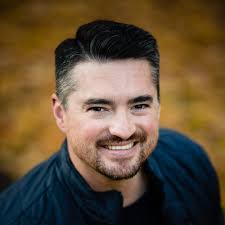
Professional Destination Wedding Photographer
In 2005 I joined the Army as an Infantryman. While stationed in Germany, I developed a passion for traveling and documenting everything I experienced. I bought a little Sony point-and-shoot camera that I carried everywhere, including my deployments to the Middle East. Whether it be exploring parts of Europe or during a dangerous mission in Iraq, I was shooting my camera.
Once I left the military in 2010, I was a lost soul. PTSD and depression consumed my life and I no longer had a purpose. I knew I loved photography, so I attended college for photojournalism and had dreams of being a war photographer. A few years later I photographed my first wedding.
The moment I discovered weddings, everything changed!
Shooting weddings bridges so many elements of my life's passions together: Surrounding myself with positive people, traveling to amazing locations, and documenting life’s once in a lifetime moments. I realized that I could do photojournalism on people’s best day, rather than their worst.
Wedding photography inspired me to be a better human, and quite literally saved my life because it gave me a purpose again. I've photographed weddings since 2013, and I fall in love with them more and more after each passing year.
Since then I have been awarded over 40 International wedding photography awards in the industry. I have traveled to over 30 countries now, with more on the horizon.